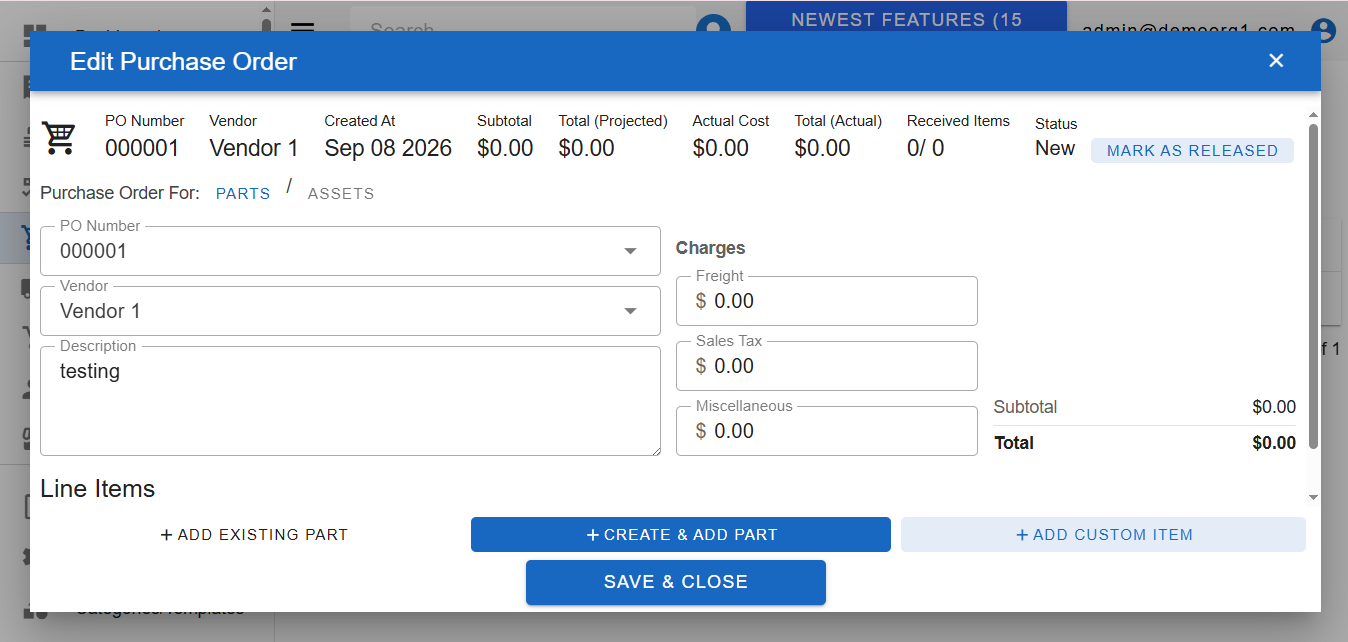
Appearance
Additional Functions
INFO
Note: Purchase Orders can only be viewed and deleted by organizational users who have been granted relevant permissions
Right clicking on a purchase order's rows open up the action menu, that lists down several options available for the purchase order.
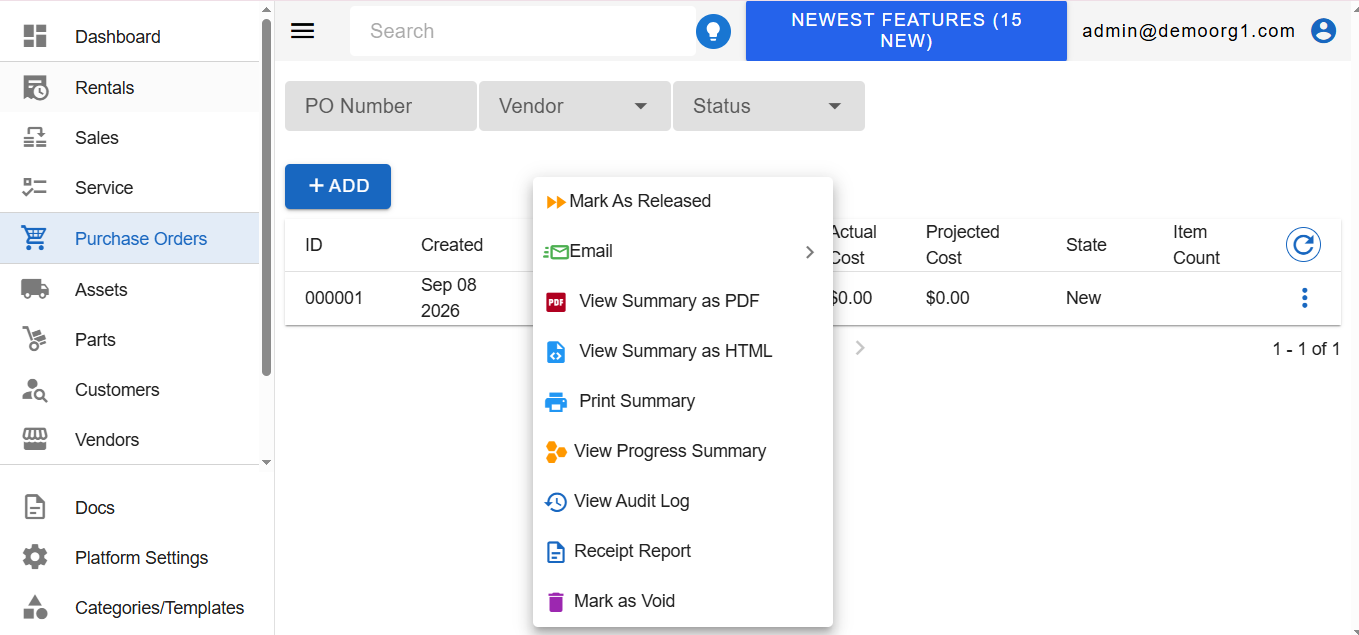
Mark As Released
This option is only available on New Purchase Orders. Marks the Purchase Order as Released.
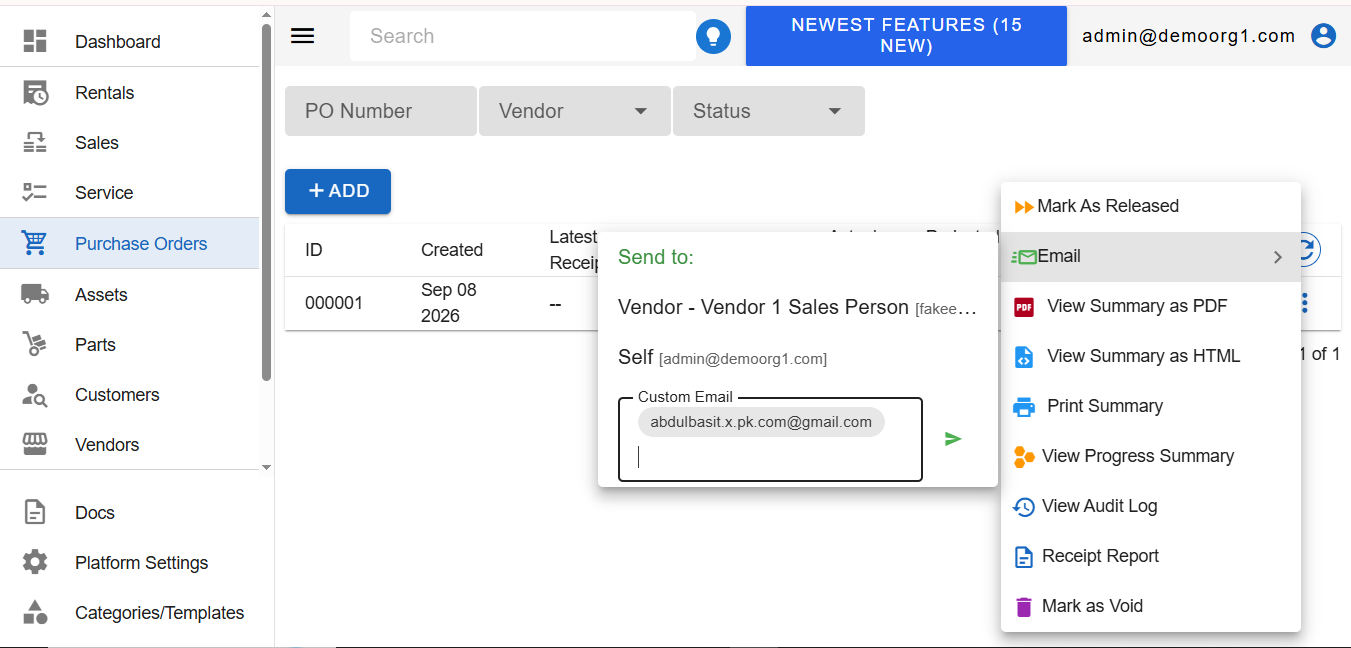
Email
This option opens up a menu that displays several emails where a copy of the purchase order can be emailed to. If needed, a custom email option is also available.
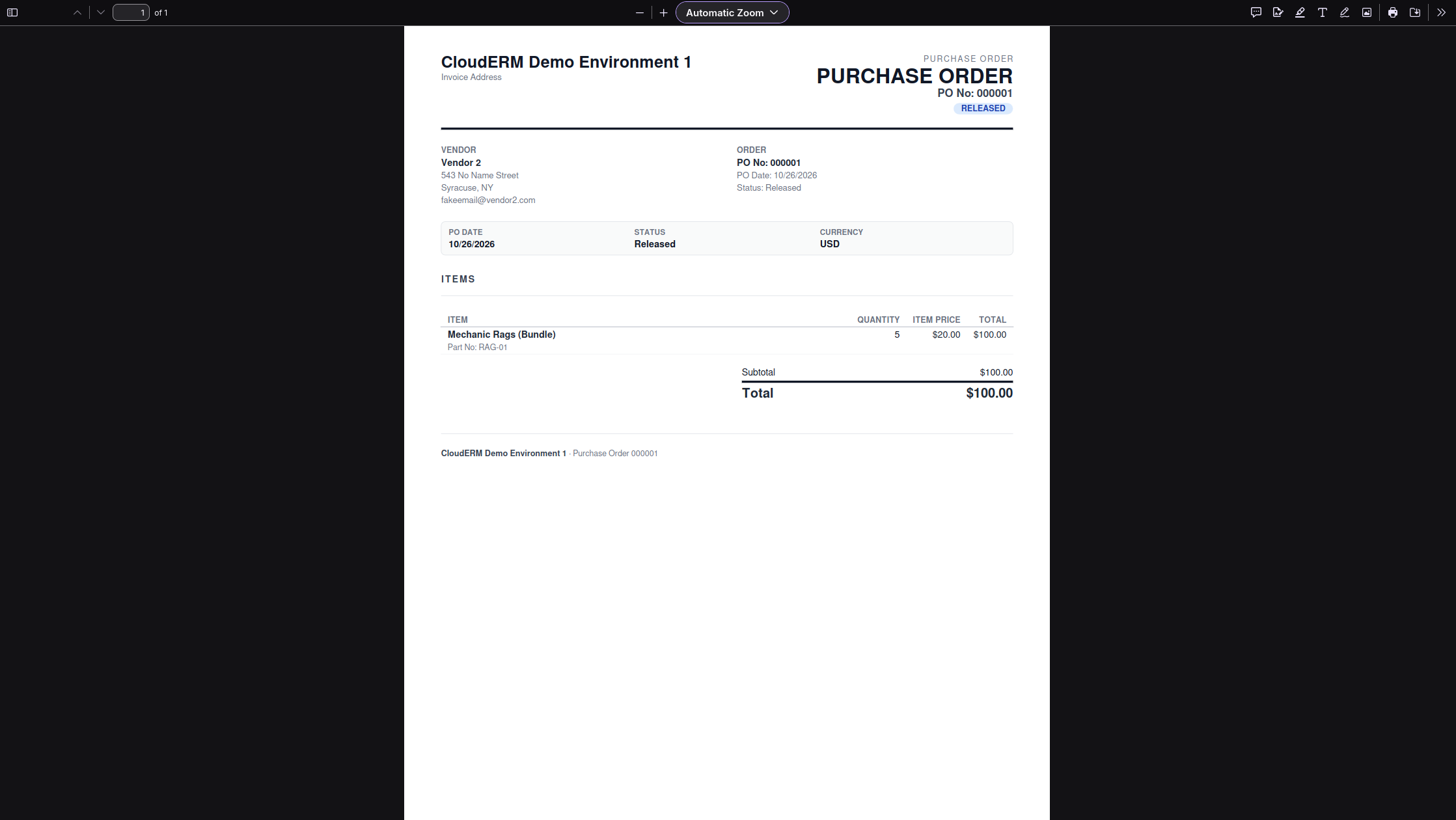
View Summary as PDF
This action opens up the purchase order in PDF format on a new browser tab.
View Summary as HTML
This action open up the order in HTML format on a new browser tab.
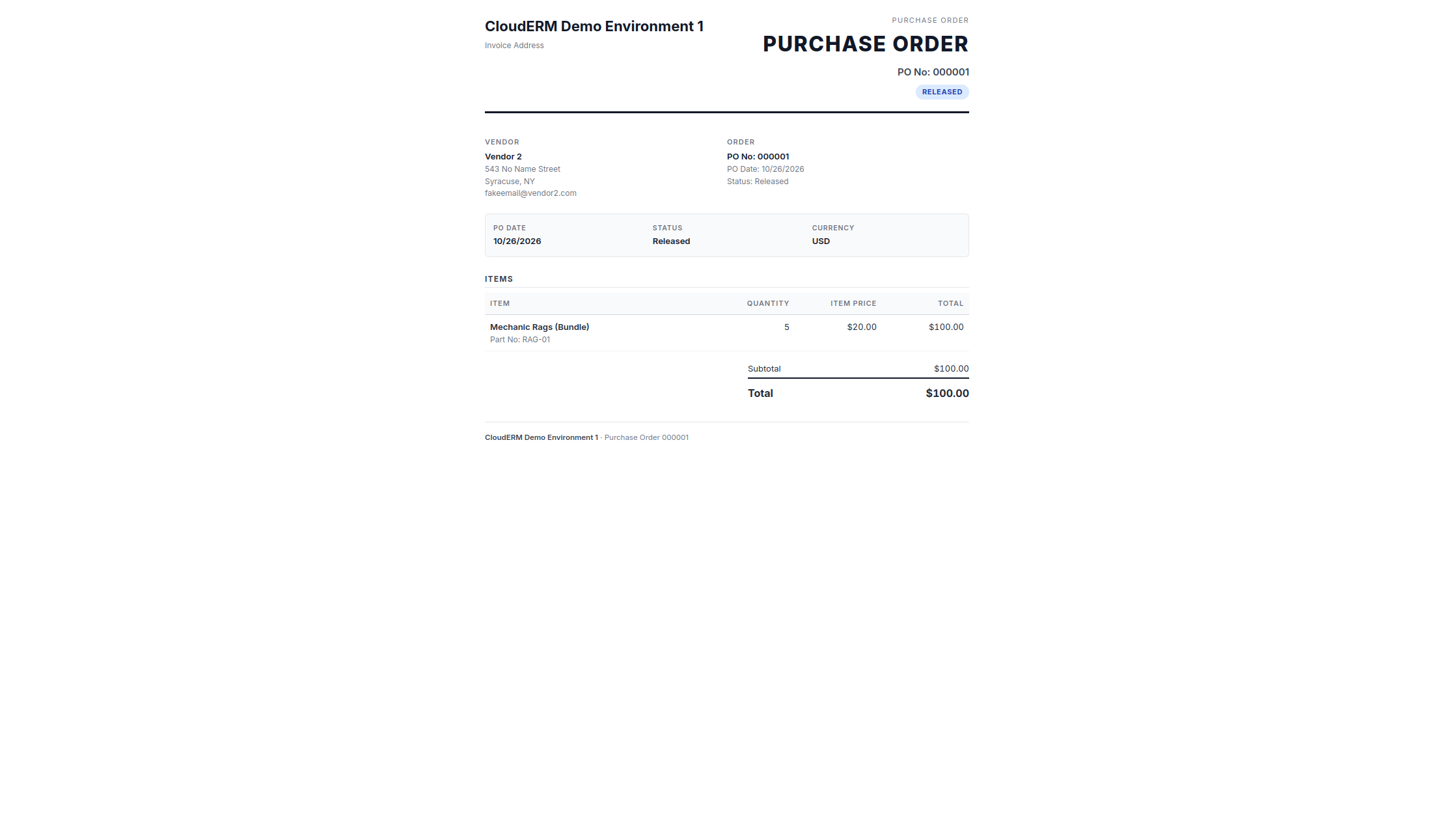
Each part line also shows its part number (Part No) under the part's name, unless the part number field is omitted in your Fields Settings. The item table reads Item, Quantity, Item Price, Total — the delivery date column is no longer shown, as it is internal planning rather than vendor-facing. The same applies to the PDF and the purchase order email.
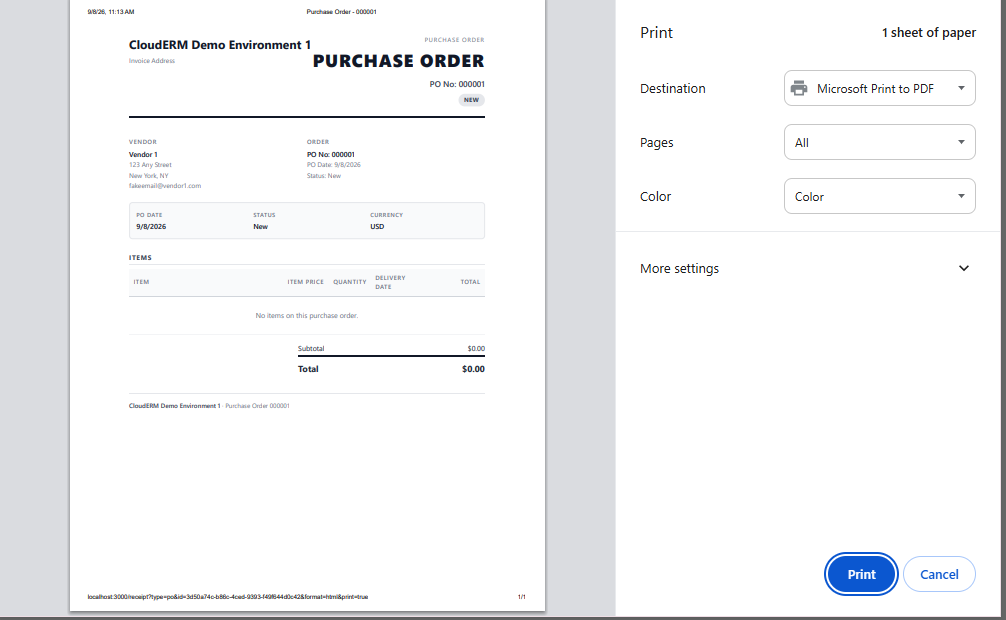
Print Summary
This action opens up the purchase order in print format on a new browser tab.
Mark As Void
This option is only available for new purchase orders that have not yet been released. Clicking this option triggers a confirmation prompt and requires user to enter a reason before marking the purchase order as void. If the purchase order still has line items on it, the prompt warns you before voiding.
Receipt Report
This action opens the PO Receipt Report for the purchase order in a new browser tab, showing the full receipt history — every item received, in what quantity and value, and by whom. It is available to users with the relevant report permission.
Consumption History
In addition to the action menu functions, the Purchase Order Popup also allows seeing consumption history for partially received or received items. To do so, open up the Purchase Order Popup that contains received or partially received items.
The Quantity Received header on each item is clickable, and opens up a small consumption history window, that lists the places where this item was consumed. Each row is either an Allocation — a work-order allocation, linking to the work order it was allocated to — or Received to stock, for units received directly into inventory. Each row also shows a status (Allocated, Partially Received, Received, Failed, or Voided).
If an allocation row's work order is for a different asset than the one this item was purchased for, a warning icon appears next to it noting the mismatch — the cost of that allocation is charged to the work order's asset rather than the one this item was originally purchased for.