Appearance
Creating A New Purchase Order
INFO
Note: Purchase Orders can only be viewed and created by organizational users who have been granted relevant permissions. Without the purchase-order create permission, the + Add button described below (and the equivalent Create Purchase Order button when booking parts against a new purchase order from a Work Order) does not appear at all, rather than showing disabled.
Step 1 - Open The Purchase Order Popup
Head to the Purchase Orders Page via links available on the Left Navigation Bar.
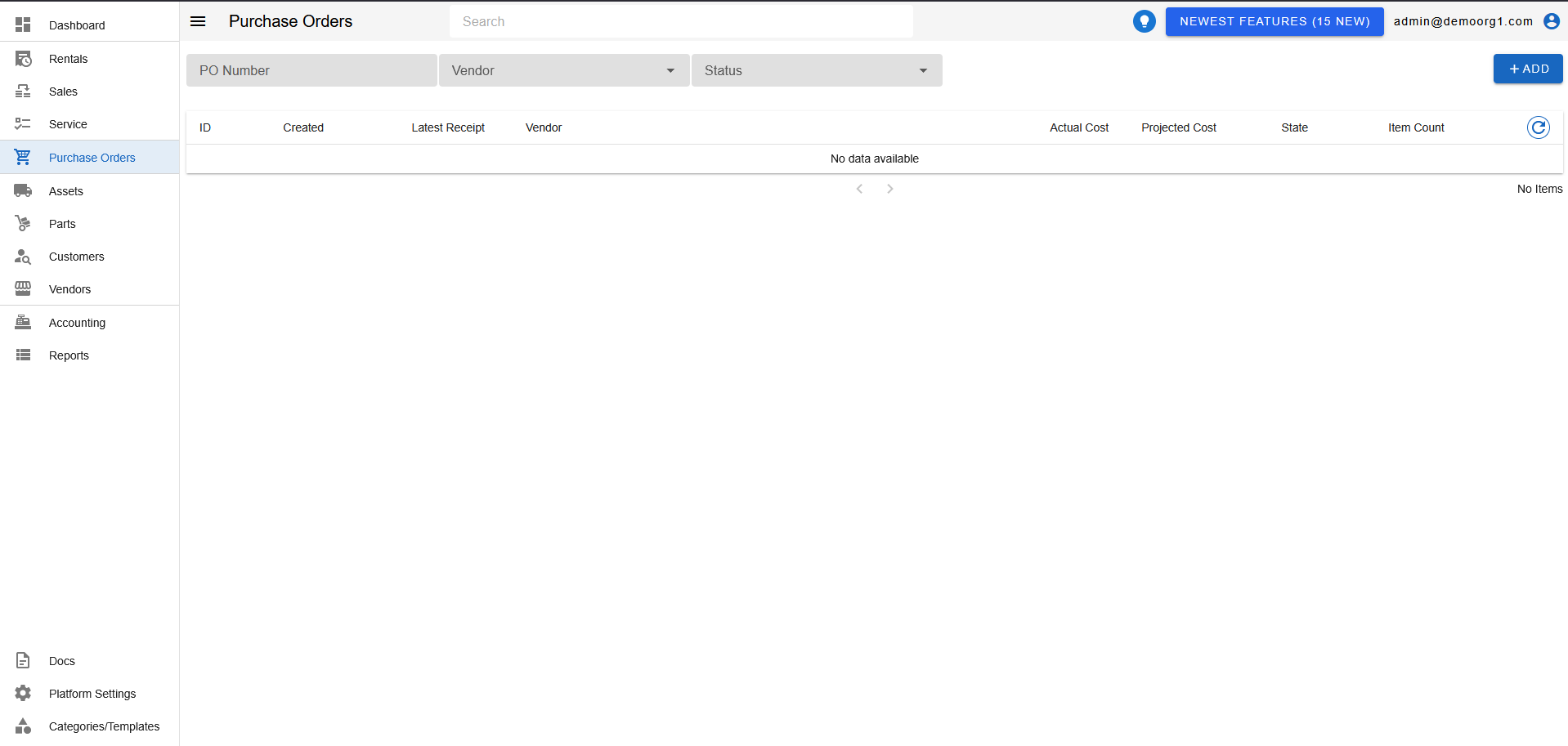
Visible towards the top right corner on the Purchase Orders Page is an + Add button. Click the button to open the New Purchase Order Popup
Step 2 - Provide Details On The Purchase Order Popup
The New Purchase Order Popup features some fields where relevant information needs to be provided
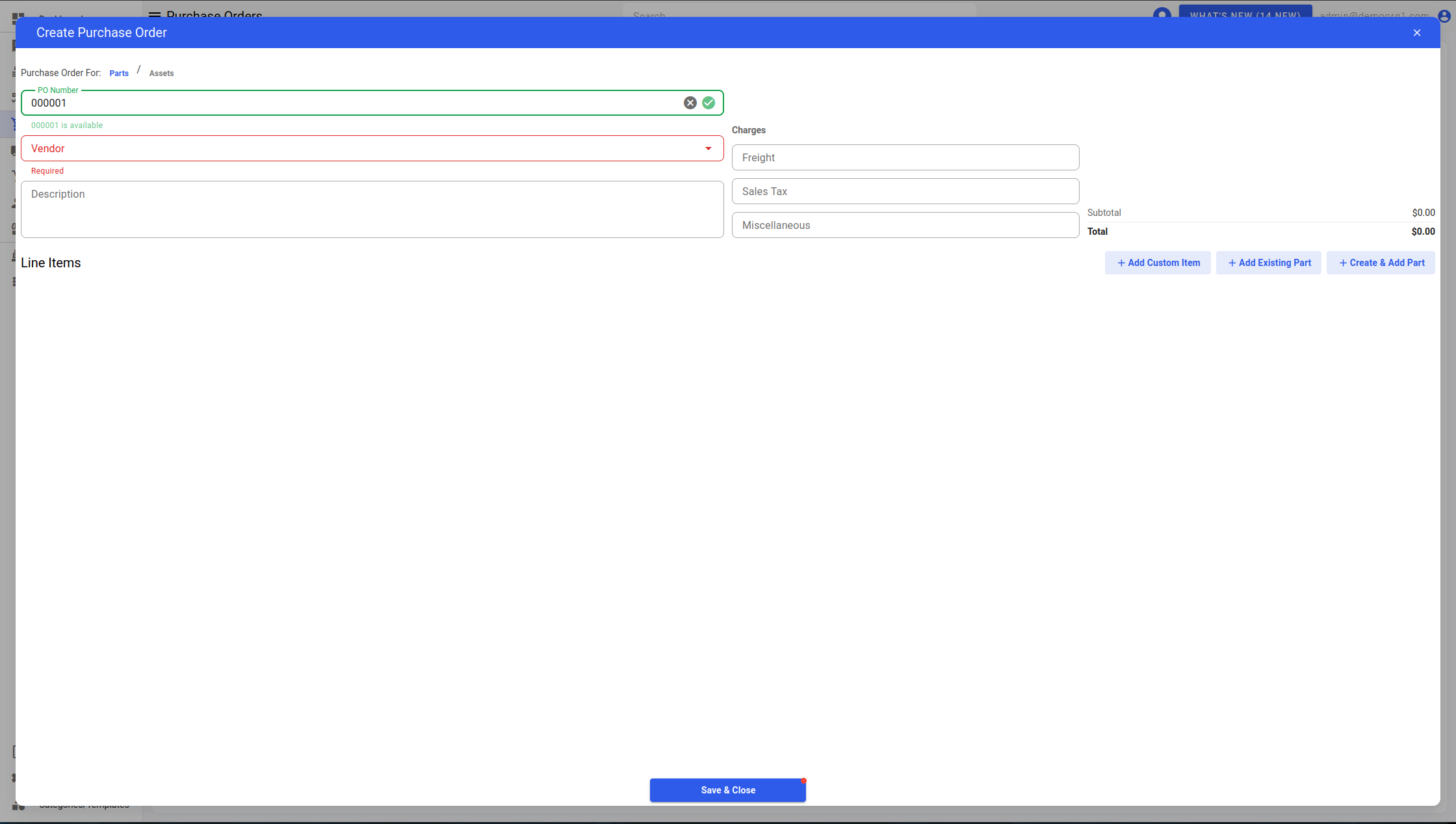
Fields highlighted in red are required fields.
The popup includes a PO Number field so you can set the purchase order's number while creating it. It is a plain text field — there is no dropdown of suggestions. The next available number is shown as a placeholder reading <number> (Auto Generated); while the field is empty, a Use <number> chip appears inside it so you can fill that number in with one click, or you can simply leave the field blank to keep the auto-generated number. Whatever you type is converted to upper case. Shortly after you stop typing (and again when you save), the number is checked: if it's free, a green check and "<number> is available" appear; if it's already used by another purchase order, the field turns red with "A purchase order with this number already exists" and the purchase order can't be saved until you change it. The field is shown only until the purchase order is released, and is read-only if you lack purchase-order update permission.
Step 3 - Attach Items To The Purchase Order
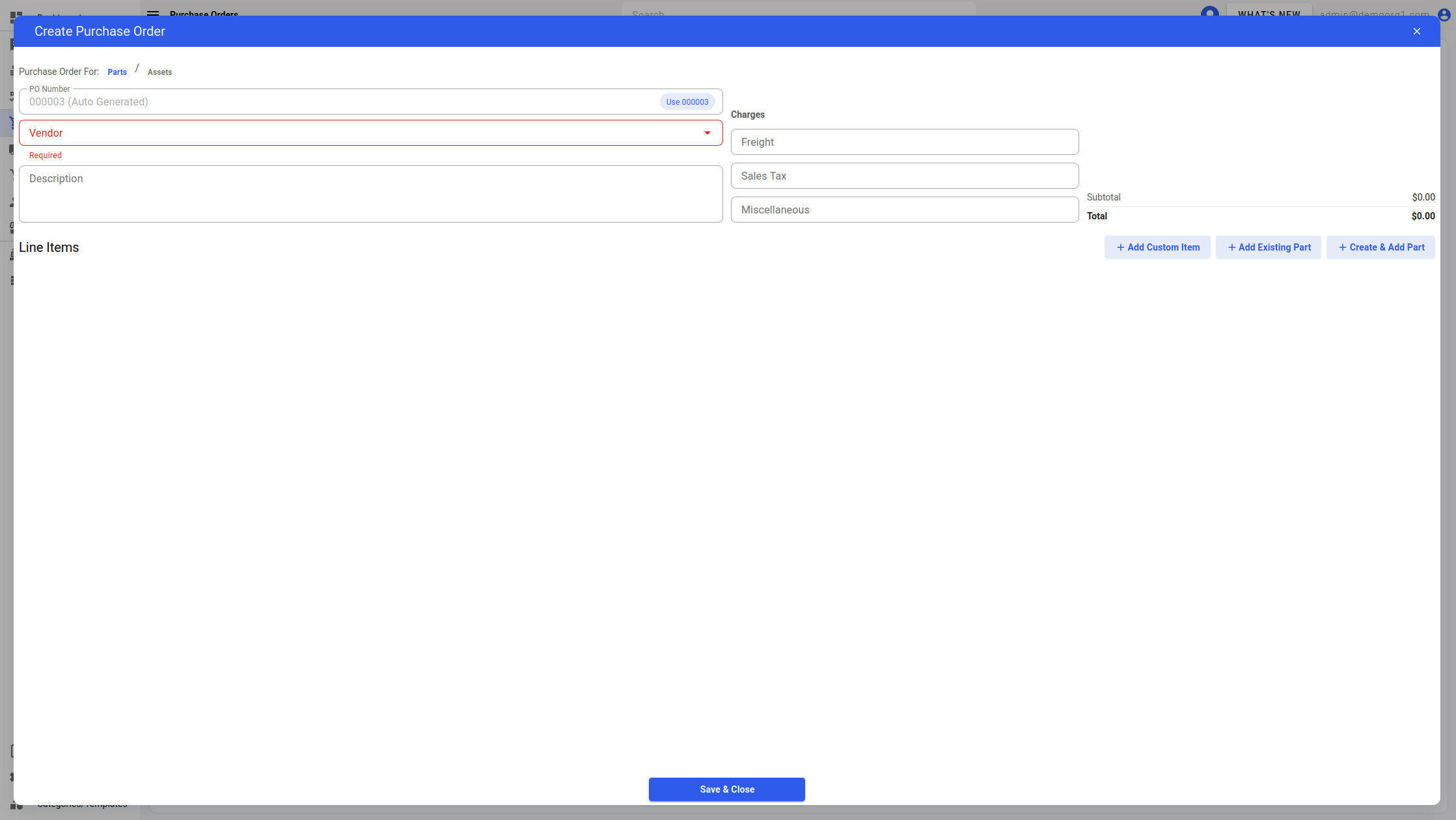
Line items are added using the buttons on the Line Items header, which sticks to the top of the popup as you scroll so the buttons always stay in view no matter how many items you have added. Each button is sized to its label. The available buttons depend on the type of Purchase Order selected:
- Add Custom Item — add a one-off item that isn't in your catalog (see below).
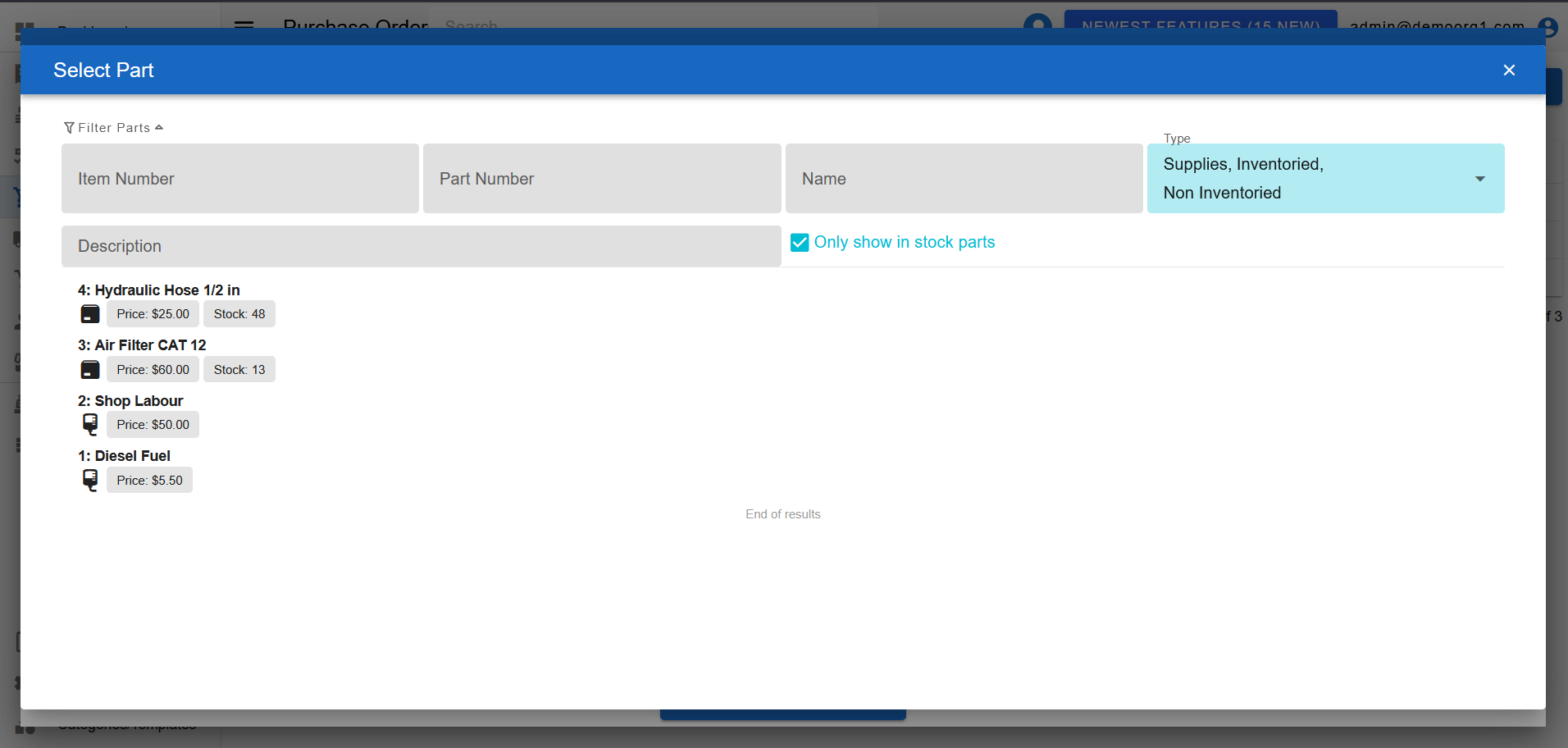
- Add Existing Part — attach a part from your existing catalog. If a name search isn't sufficient, click the filter icon towards the right of the item selection field to open the Advanced Search Popup and search using multiple filters.
- Create & Add Part / Create & Add Asset — create a brand-new part or asset on the fly. This opens the respective item's creation popup; once saved, the new item is automatically added to the Purchase Order's list of items. Any quantity you set while creating the item carries over to its line item's order quantity.
INFO
Existing-catalog line items are parts only — there is no inline Part/Asset toggle on a line. To include an asset on a Purchase Order, use Create & Add Asset to create the asset record; existing assets can no longer be attached to a Purchase Order from the catalog.
WARNING
New assets and parts can only be created once the Purchase Order has been saved. On a brand-new, unsaved Purchase Order the Create & Add buttons are disabled with the message "New assets and parts can only be created once this Purchase Order is saved. Save the Purchase Order first, then add newly-created items to it." Save the Purchase Order first, then add newly-created items to it. An asset or part created this way is linked to the Purchase Order, and its line becomes locked to that Purchase Order.
Adding a custom item
Custom items cover one-off purchases that aren't in your parts or assets catalog. Click Add Custom Item and provide the item's details:
- A Name is required (custom line items cannot be saved without one).
- An optional Estimated Time Of Arrival date. Three shortcut buttons — 1 day, 1 week, and 1 month — set the ETA relative to today. If provided, the ETA must be a future date (
Item must have an ETA in the future); leaving it blank is allowed. - Optionally, a custom item can be associated with an asset. When you add the item, a Link Asset Reference? prompt asks whether you want to associate an asset reference on this item (Yes / No). Choosing Yes opens the asset selection popup so you can pick the asset; if the purchase order was opened from a work order, the prompt instead offers that work order's asset directly ("Would you like to associate related work order's asset, [number] name, as reference on this part?"). The same asset-reference prompt also applies to regular parts. This can be done while creating or editing the purchase order.
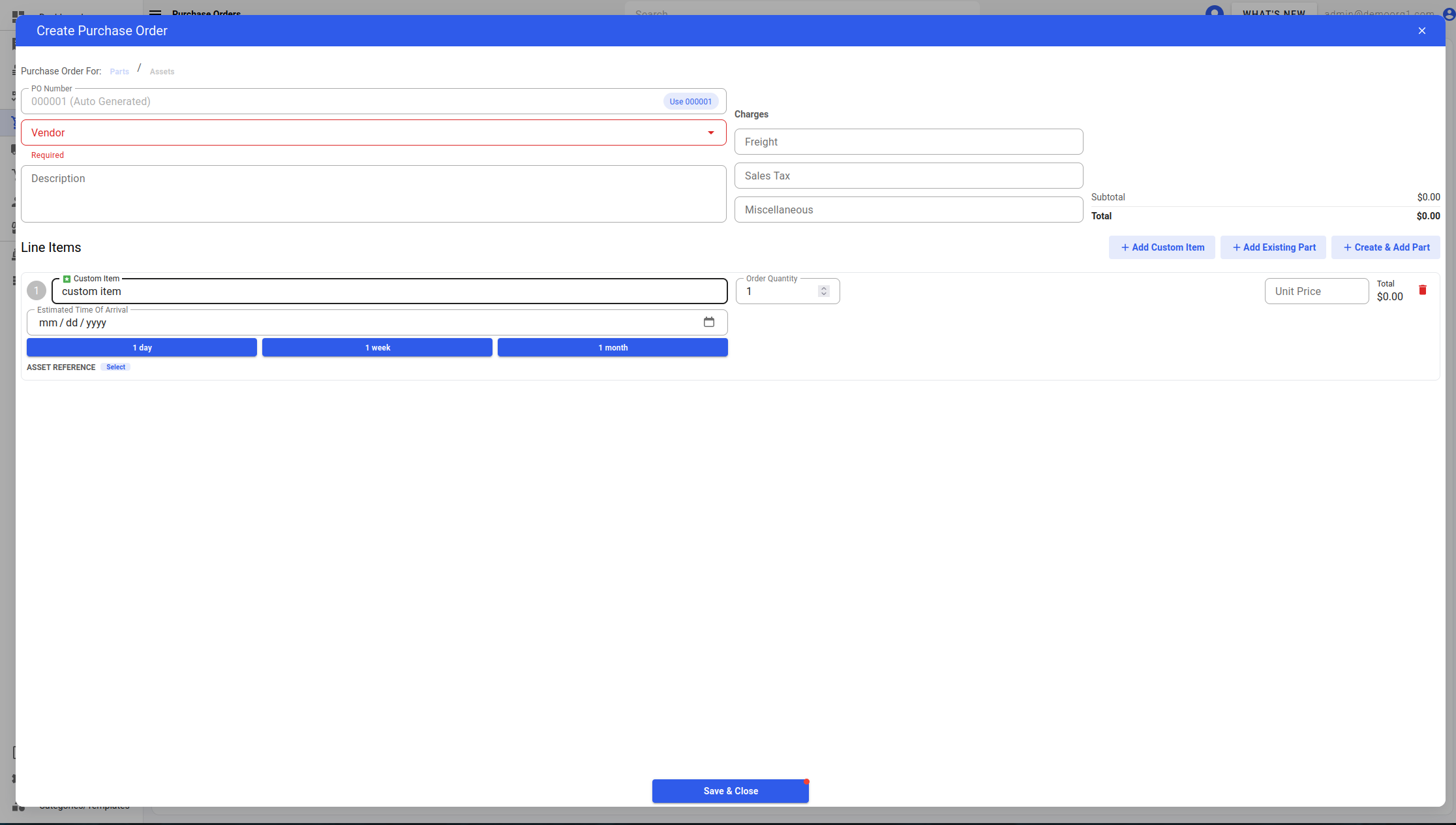
On a released purchase order, the ETA can still be set on newly added custom lines, while existing lines' ETA is locked. Custom items can also be received when the order is processed (see Processing a Purchase Order → Receive Items).
Setting a custom price on a line item
Each line item has an editable Unit Price, and the line total is the unit price times the order quantity. If you enter a price that differs from the item's stored purchase price, an Update this price on the item record checkbox appears — tick it to persist your custom price back to the part or asset record, so it becomes that item's new purchase price. Prices can be edited until the purchase order is released, after which they are read-only.
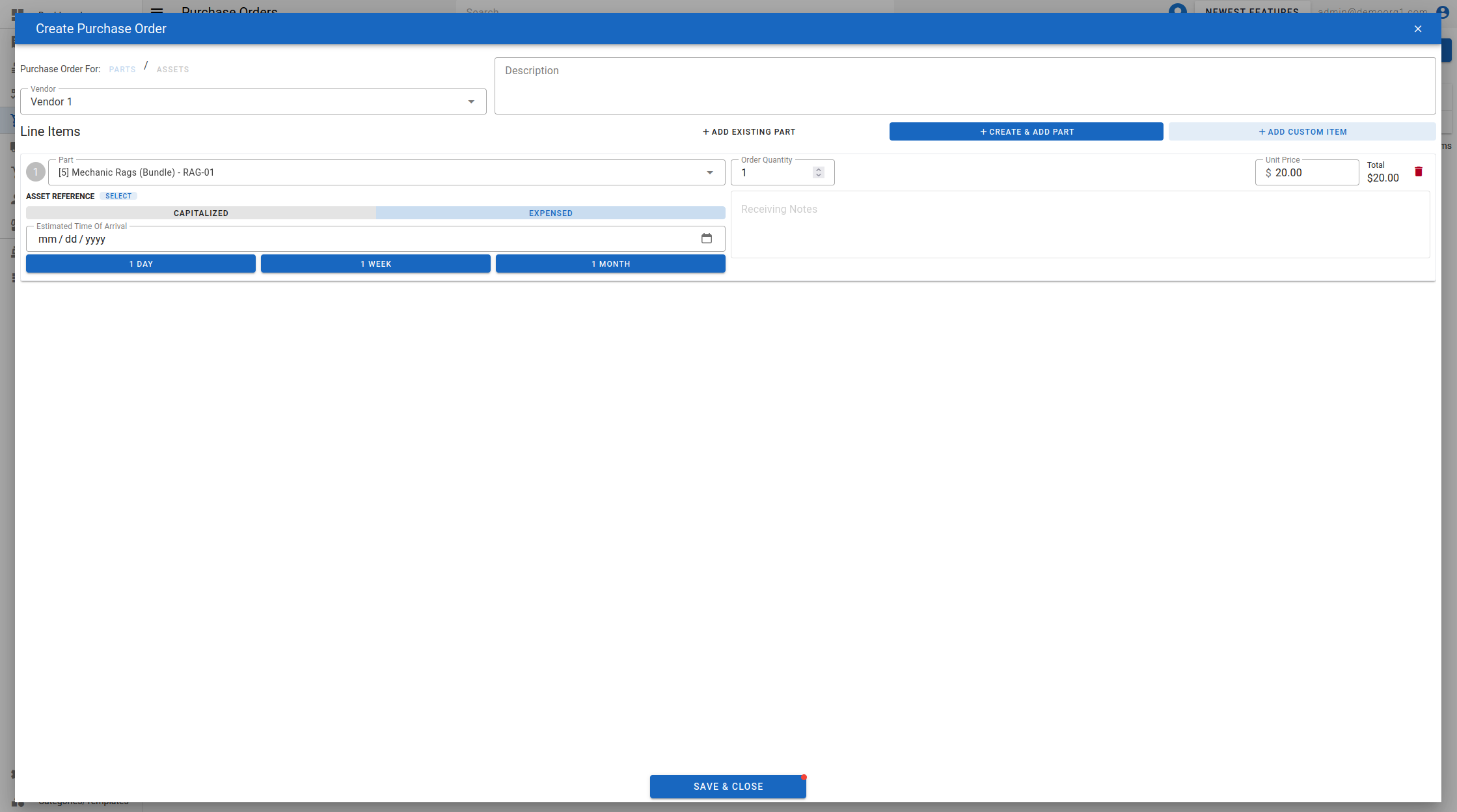
The prices recorded on each PO line are later visible on the item's PO History tab (see Parts → Additional Functions and Assets → Additional Functions).
Once all required items have been added to the Purchase Order, click on the Save & Close button to save the purchase order to the database.
Auto-allocating parts when creating a purchase order from a work order
When the New Purchase Order Popup is opened from a work order's parts-allocation flow (booking parts against a brand-new purchase order rather than an existing one), and your organization has turned on the By Default Allocate All Parts To Work Order setting, a checkbox labelled Auto Allocate All Parts To Work Order appears at the left of the footer, checked by default.
- Left checked, saving the purchase order allocates every allocatable line on it to the work order in full and skips the usual per-line Purchase Order Allocation screen.
- Unchecking it before saving opens the Purchase Order Allocation screen as normal, so allocations can be made line by line.
The same organization default also applies when picking an existing purchase order in that flow instead of creating one — a note above the search field warns that clicking a purchase order will auto-allocate its allocatable parts to the work order (see Creating A Work Order → Selecting A Purchase Order And Allocating Parts).